Session Chair
Biological membranes are a defining feature of life. This symposium brings together different aspects of membrane biology from the detailed structural organization and dynamic assembly of membrane bilayers to important functions as a facilitator of cellular communication and a regulator of ion fluxes. This excellent set of speakers in the ASPB President’s Symposium will highlight their newest research findings, and at the same time share the broader impacts of their work.
Featured talks
The plant plasma membrane is a dynamic signalling hub, yet its role in antiviral responses remains unclear. Using super-resolution microscopy, we show that a Ca²⁺-dependent kinase restricts potexvirus spread by phosphorylating the nanodomain protein REMORIN in the lipid-dependant manner altering its interactome, promoting callose deposition at plasmodesmata, and linking membrane organization to actin dynamics.
Associate Professor, Institute of Subtropical Mediterranean Horticulture (IHSM-UMA-CSIC), Malaga, Spain.
Plant ER–plasma membrane contact sites are key hubs for lipid trafficking. This talk highlights the emerging roles of different plant synaptotagmins—lipid transporter proteins located at these interfaces—in coordinating lipid exchange and plasma membrane remodeling, thereby preserving lipid homeostasis and enhancing resilience during abiotic stress.
Assistant Professor and Canada Research Chair in Plant Cell Biology Department of Cell & Systems Biology, University of Toronto
Cell Wall Signaling and Responses at the Plasma Membrane” Plants monitor cell wall integrity and respond by modulating plant cell wall synthesis and secretion. Important components of both plant cell wall signaling and responses occur at the plasma membrane, the interface between the plant cell and its cell wall.
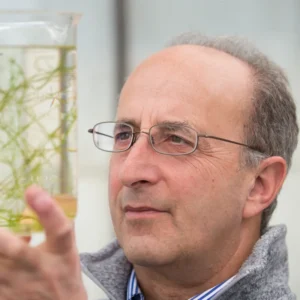
Stomata depend on ion transport to power changes in aperture. We may think of transport as a set of modules from which to devise strategies for improving water use by plants. My laboratory developed and uses the OnGuard platform to model and identify targets for bioengineering. I will outline our successes, including in manipulating native ion channel structures and regulation to improve plant water use efficiency and photosynthesis.